Japan


Employee health and safety
- Safety and Health Control System
- Risk Assessment Activities
- Employee Health
- Health Management Promotion Structure
- Initiatives to Promote Internal Awareness
- Initiatives to Improve Health Literacy
- Initiatives to Promote Health Management in the Community
- Employee Benefits
Basic Safety Concept
Make safety the first priority. (Safety First)
The basis of corporate activities is “people.”
The first priority must always be given to safety that protects “people.”
All accidents are preventable.
Managers must lead the workplace, having the strong belief that “all accidents are preventable.”
Safety is everyone’s responsibility.
While the Company conducts what it should do, every single person must take responsible actions to protect themselves.
Let’s make a culture where everyone follows the rules and mutually warns each other in the workplace.
Safety and Health Control System
The Central Safety and Health Committee, attended by representatives of each business site and labor unions, is held twice a year to determine the basic policies on occupational safety, occupational health, and traffic safety.
In addition, the Central Safety and Health Committee conducts a central safety patrol once a year. Through “cross-cutting” safety activities based on cross-checks among departments, we raise safety awareness within the Company. At each business site, a Departmental Safety and Health Committee is established, and, based on the policy of the Central Safety and Health Committee, each site carries out day-to-day safety and health activities.
Initiatives for safety and health
The following are the initiatives primarily implemented in FY2025 to ensure employees can work safely, securely and in good health.
Initiatives in FY2025
| Target | Priorities | Specific measures | |
|---|---|---|---|
| Occupational Safety | Zero serious or lost-time accidents Total number of occupational accidents of 46 or less |
Rigorous workplace safety management |
|
| Improve safety awareness and ensure safe behavior through repeated education and drills |
|
||
| Prevention of accidents for workers with limited work experience (less than 6 months) and for personnel who have been transferred to new processes (less than 1 month). |
|
||
| Occupational Health | Zero work-related illnesses Number of suspected heat stroke cases: 70 or fewer |
Proper understanding and management of chemical substances |
|
| Thorough preventive measures against heat stroke |
|
||
| Raising awareness of health management |
|
Risk Assessment Activities
At Suzuki, we conduct risk assessments as part of activities aimed at preventing occupational accidents. By identifying risks in individual tasks and implementing measures to mitigate them, we are working to improve safety and enhance employees’ awareness of safety. Risk assessments were first introduced in 2001, and since 2016, we have also conducted risk assessments on chemical substances. In 2017, to prevent any serious occupational accidents, we revised our risk assessment evaluation methods, re-evaluated particularly high-risk tasks, and have been working to reduce risks even further.
Introduction of OSHMS
Suzuki is promoting the introduction of an Occupational Safety and Health Management System (OSHMS) with the aim of continuously improving safety and health standards. In 2024, it was introduced at the Osuka Plant as a model site, and in 2025 it was also introduced at each of our production plants in Kosai, Sagara, Iwata, and Hamamatsu (covering all of Suzuki’s production plants). Going forward, we will expand OSHMS implementation to additional sites in sequence.
Suzuki Safety and Health Policy
- Safety and health activities are carried out with the cooperation of all Team Suzuki members.
- We strive to prevent occupational accidents before they occur by focusing on “Genba, Genbutsu, Genjitsu (Actual Place, Actual Thing, Actual Situation),” aiming for zero serious accidents and the continuous reduction of occupational accidents.
- We comply with laws and regulations related to safety and health, as well as internal company rules and policies.
- We appropriately implement measures in accordance with the Occupational Safety and Health Management System
March 20, 2025
Representative Director and President

Incidence of occupational accidents
Suzuki Motor Corporation
(Unit: Cases)
| FY2023 result |
FY2024 result |
FY2025 | |||
|---|---|---|---|---|---|
| Target | Result | ||||
| Total number of occupational accidents | 68 | 62 | 46 or less | 72 | |
| Serious and lost-time accidents | Lost-time accidents | 2 | 1 | 0 | 2 |
Serious accidents (Fatal on-site accidents*) |
0 (0) |
0 (0) |
2 (1)*1 |
||
*1
An incident occurred during a vehicle test at the Sagara test course in which a worker was fatally injured. At the Sagara test course, we conducted an investigation into the incident and performed a root-cause analysis, and implemented measures to prevent recurrence based on the findings. In addition, we promoted risk assessments, KY (Kiken Yochi) activities, and the development and education of work standards to prevent similar incidents. We will roll out and share this case across all companies in the Suzuki Group and among our cooperating companies, and use it to strengthen incident prevention throughout the Group.
Suzuki Group
(Unit: Cases)
| FY2023 result |
FY2024 result |
FY2025 result |
||
|---|---|---|---|---|
| Total number of occupational accidents | 317 | 212 | 233 | |
| Serious and lost-time accidentss | Lost-time accidents | 49 | 35 | 32 |
Serious accidents (Fatal on-site accidents*) |
0 (0) |
3 (0) |
4 (2)※2 |
|
[Target Companies]
Suzuki Motor Corporation, Suzuki Auto Parts Mfg. Co., Ltd.., Snic Co., Ltd. Suzuki Toyama Auto Parts Mfg. Co., Ltd., Suzuki Akita Auto Parts Mfg. Co., Ltd. Maruti Suzuki India Limited, Suzuki Motorcycle India Private Limited, Thai Suzuki Motor Co., Ltd.,Suzuki Motor (Thailand )Co., Ltd., PT Suzuki Indomobil Motor, Suzuki Manufacturing of America Corporation, Magyar Suzuki Corporation Ltd, Pak Suzuki Motor Co.,Ltd, Suzuki Philippines Inc,TDS Lithium-Ion Battery Gujarat Private Limited, Suzuki Thilawa Motor Co., Ltd., Cambodia Suzuki Motor Co., Ltd., Suzuki motor de Colombia S.A., and Vietnam Suzuki Corp.
*2
Two incidents occurred at Suzuki Motor Corporation and Suzuki Motor (Thailand) Co., Ltd.
At Suzuki Motor (Thailand) Co., Ltd., a fatal accident occurred involving a construction contractor working on site as an external subcontractor.In response to this incident, Suzuki Motor (Thailand) Co., Ltd. conducted an investigation and performed a root-cause analysis, and then implemented measures to prevent recurrence based on the results.In addition, risk assessments were conducted, and daily meetings and KY (Kiken Yochi) activities were carried out every day to strengthen efforts toward the prevention of similar incidents.
This case will be rolled out and shared across all companies in the Suzuki Group and with cooperating companies, to strengthen incident prevention throughout the Group.
Trends in occupational accident frequency rate
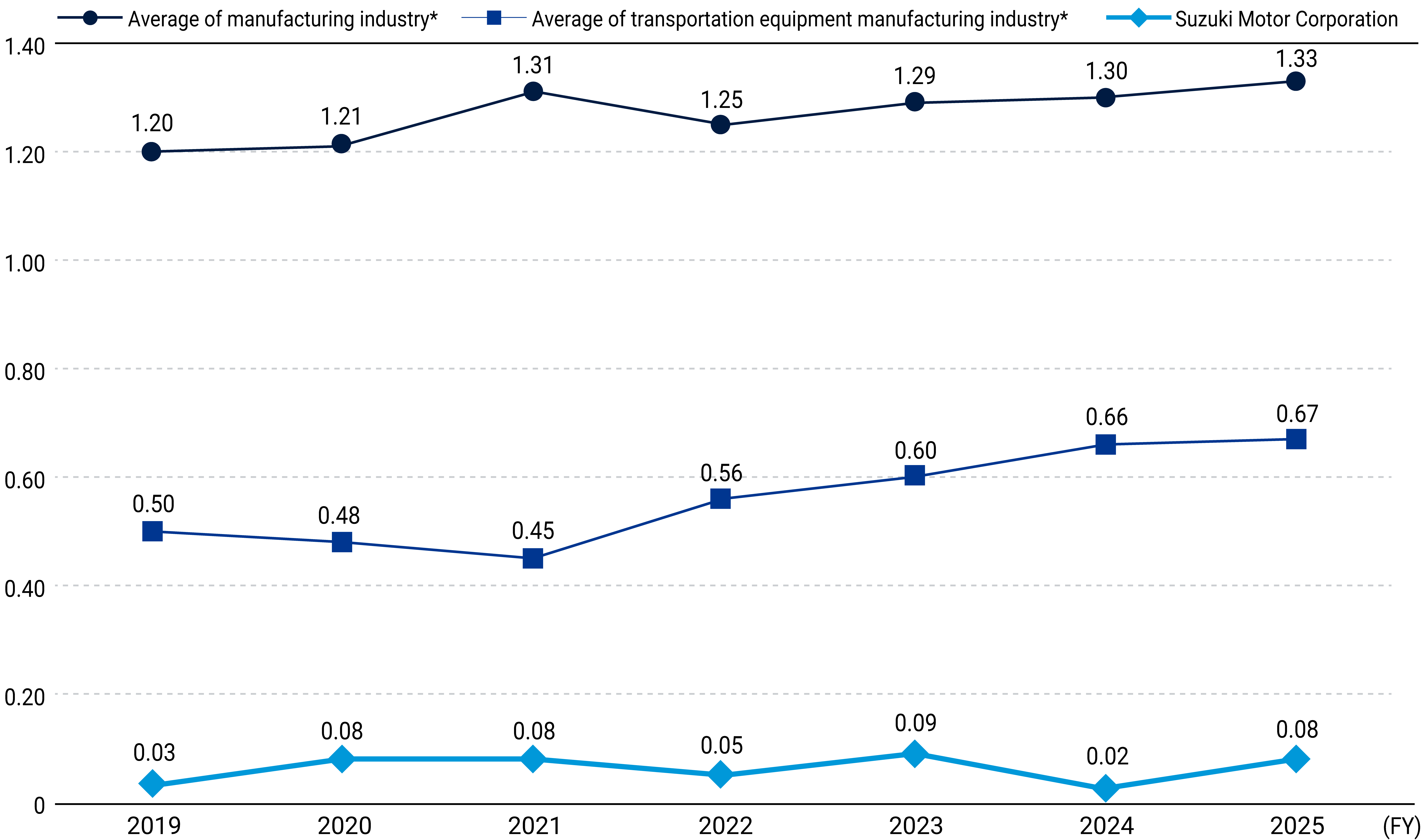
* Source: Survey on Industrial Accidents, Ministry of Health, Labour and Welfare
India
Maruti Suzuki India Limited
Maruti Suzuki India Limited has obtained ISO 45001 certification at its Manesar plant, Gurgaon plant, R&D center at Rohtak, and Head Office at Delhi, and is committed to safety and health.
Employee Health
Health management
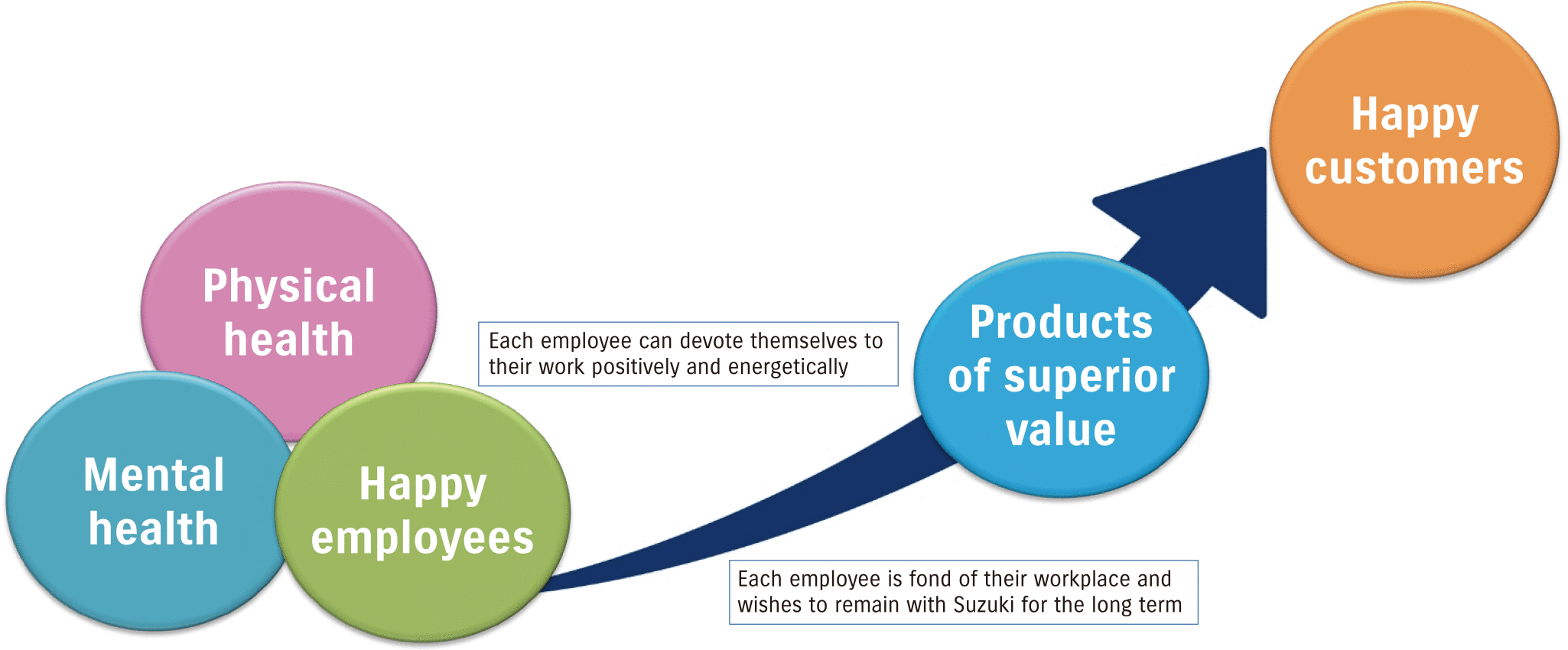
At Suzuki, under the catchphrase “Our customers’ smiles are born from our employees’ smiles,” we have worked as “Team Suzuki” to promote KENKO (health) management activities so that all employees working in the Suzuki Group can practice the Mission Statement and work in good spirits with both healthy minds and bodies—enabling us to provide products that bring smiles to our customers.Through our ongoing initiatives, Suzuki has been certified as a “Certified Health Management Organization” every year since 2021. In 2025 and 2026, we were also certified as a Certified Health Management Organization (White 500). Going forward, we will continue our efforts in Health management to keep creating customers’ smiles by continuously nurturing our employees’ smiles.
Health Declaration
Guided by the catchphrase of “Happy customers are created by happy employees!” the Company will take on health initiatives as Team Suzuki to ensure that all employees who work at the Suzuki Group can implement the Mission Statement and work positively and energetically in excellent mental and physical health, and as a result, provide products that delight customers.
Representative Director and President

Health Management Promotion Structure
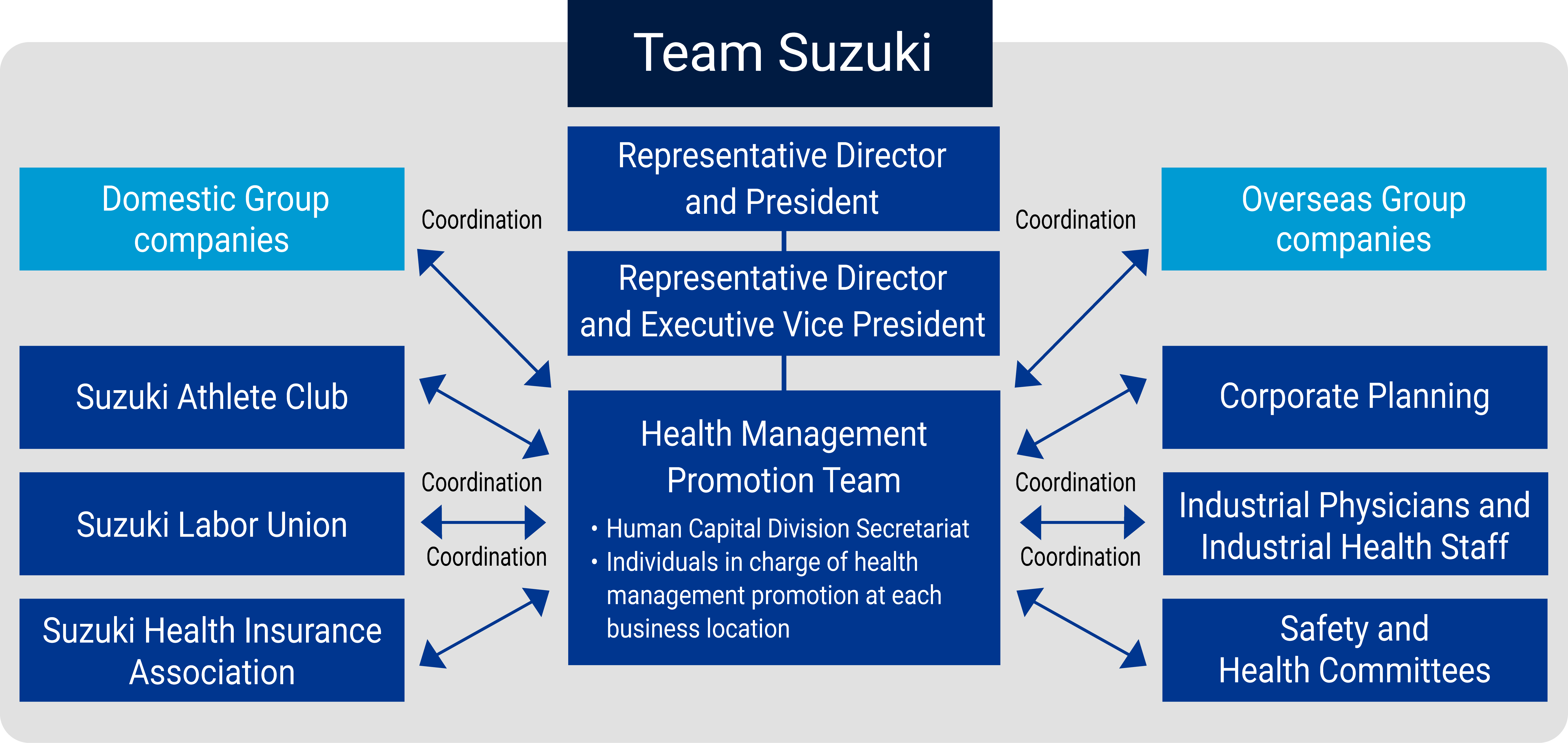
With the President and Representative Director at the top, the Safety, Health, and Disaster Prevention Department serves as the promotion secretariat.
In implementing these initiatives, health promotion representatives are appointed at each business site, and the Company works in collaboration across the organization to carry them out.
In addition, we actively incorporate the opinions of specialized professionals that support employees’ health, such as occupational physicians for health promotion, public health nurses, and nurses, and we promote initiatives in cooperation between labor and management.
Furthermore, members of the health management promotion team obtain qualifications as health management expert advisors and/or health management advisors. Through this, they deepen their understanding of health management and conduct activities to introduce our initiatives widely both within and outside the company.
Promotion structure
Desired state we aim for through health management
Strategy Map
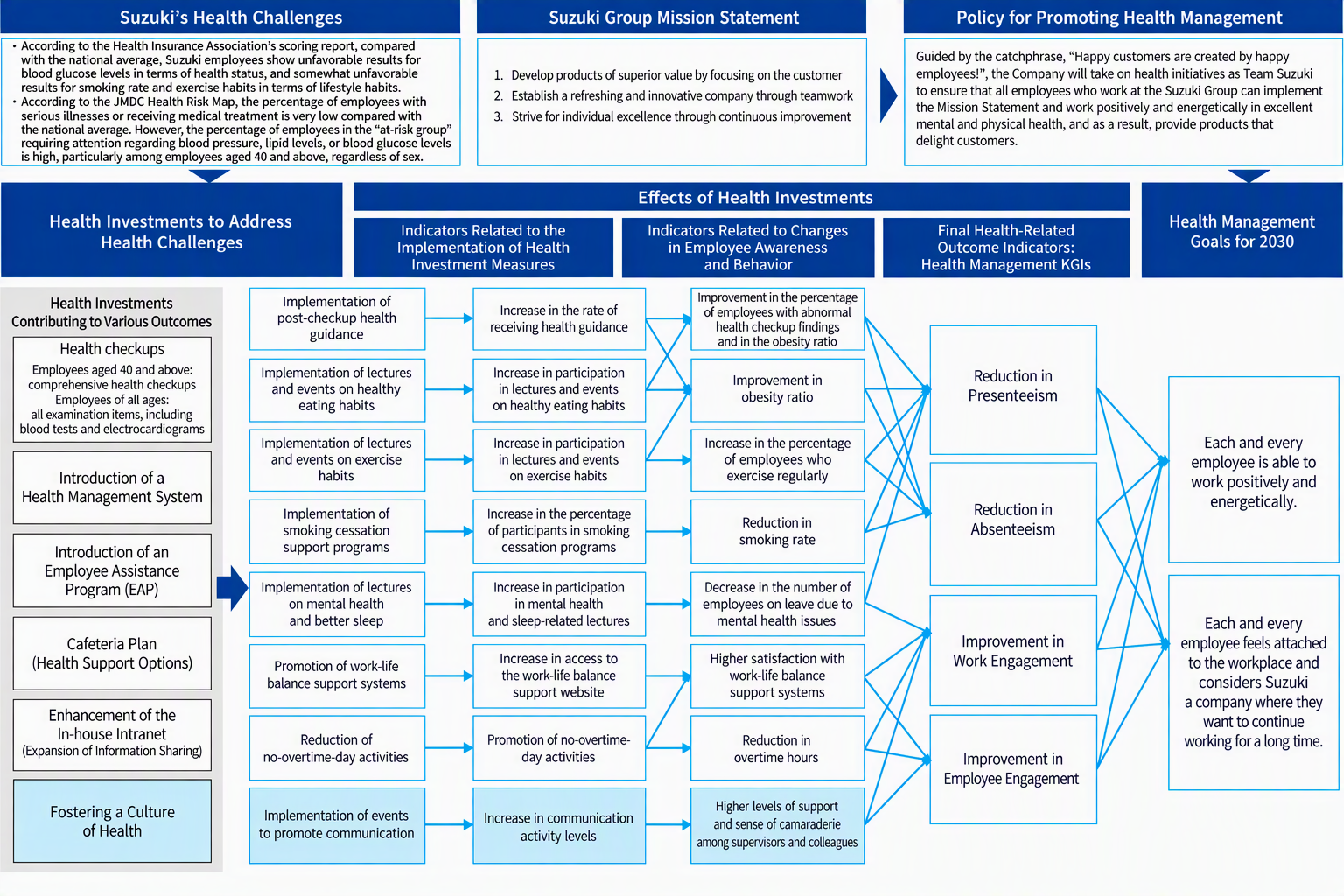
KGIs for promoting health management
| Category | Measurement method | FY2022 | FY2023 | FY2024 | FY2025 | FY2025 Targets |
|---|---|---|---|---|---|---|
| Absenteeism → Being on leave or absent from work |
Number of employees on leave for more than one month due to mental health issues / Total number of → A smaller value indicates a better condition. Employees | 0.8% | 0.7% | 0.6% | 0.73% | 0.5% or less |
| Number of employees on leave for more than one month due to illness other than mental health issues / Total number of employees → A smaller value indicates a better condition. | 0.2% | 0.2% | 0.17% | 0.28% | 0.15% or less | |
| Presenteeism → A condition in which operational efficiency has been reduced due to a health problem |
Average employee survey results (employees’ demonstrated performance) using SPQ (Single-Item Presenteeism Question, the University of Tokyo single-item edition) → A smaller value indicates a better condition. | ー | 29.0% | 27.9% | 26.5% | 20.0% |
| Work engagement → A condition in which vitality, enthusiasm, and immersion are fully realized |
Using the aggregate values from the New Brief Job Stress Questionnaire, the scores are converted to deviation values based on the national average (50.0). → Higher scores indicate a better condition. | 46.1 | 46.2 | 46.9 | 47.3 | 50.0 |
Health indicators (KPI)
| Category | FY2021 | FY2022 | FY2023 | FY2024 | FY2025*2 | FY2025 Targets |
|---|---|---|---|---|---|---|
| Percentage of employees who received regular health checkups | 100.0% | 100.0% | 100.0% | 100.0% | 100.0% | Maintain 100.0%, |
| Percentage of employees who underwent a thorough examination after a regular health check*1 | - | - | - | 94.21% | 94.78% | 100.0% |
| Specific health check implementation rate | 99.40% | 99.50% | 99.00% | 97.70% | 99.40%*2 | 100.0% |
| Specific health guidance implementation rate | 53.10% | 57.80% | 60.50% | 61.00% | 60.30%*2 | 55%→60% (Updated target because it was achieved in FY2022) |
| Stress check response rate | 95.20% | 93.00% | 91.90% | 93.10% | 92.00% | 95% or more. |
| Smoking rate | 24.80% | 26.20% | 24.30% | 23.80% | 23.20% | 15% or less, |
| Exercises regularly*3 (Exercises for at least 30 minutes per session at least twice a week, for one year or more) |
25.50% | 20.60% | 25.30% | 26.10% | 27.10% | 30% or more. |
| Sufficiently rested through sleep*3 | 61.60% | 62.50% | 61.90% | 61.50% | 61.90% | 65% or more. |
| Skips breakfast at least three times a week*3 | 17.40% | 18.60% | 18.80% | 19.60% | 19.90% | 10% or less, |
| Drinks alcoholic beverages regularly*3 (approximately 180 ml or more per day) |
11.70% | 10.70% | 9.30% | 9.80% | 7.20% | 10% or less, |
| Obesity ratio | 32.00% | 30.70% | 27.00% | 35.50% | 36.60% | 25% or less, |
| Prevalence of employees showing irregularities in glucometabolic items | 14.70% | 14.20% | 16.80% | 15.50% | 15.60% | 12% or less, |
| Prevalence of employees showing irregularities in lipid items | 29.30% | 27.50% | 25.50% | 26.00% | 25.70% | 25% or less, |
| Prevalence of employees showing irregularities in blood pressure | 8.90% | 11.80% | 13.00% | 13.00% | 13.00% | 8% or less, |
*1 From FY2024, the figures are compiled based on the re-examination attendance rate for the “needs further detailed examination” items for blood pressure, glucose metabolism, and cancer.
*2 Disclosed based on figures aggregated as of September 11, 2026.
*3 Calculated based on health-check questionnaire forms for regular health checkups.
Initiatives to Promote Internal Awareness
What is health management? How does it relate to us? Based on feedback from employees with such questions, we implemented initiatives to deepen understanding of health management issues within the Company. As a result of these efforts, internal awareness of health management increased from 12% (October 2022) to 74% (September 2023) to 79% (September 2024) and then to 82% (September 2025).
Message from the President
"Happy customers are created by happy employees!" With this as our health management slogan, the president sent a message to all employees, encouraging the entire company to work together to promote health management.
Regular information dissemination
Once a month, the health management promotion team publishes “Health Management News” to share information on health management initiatives with employees and to invite ideas and opinions about the activities.
In addition, the on-site medical office publishes a monthly newsletter, “Hanaemi.” Under the concept “Even if you aren’t interested right now, it may be useful when the time comes,” it provides familiar and approachable health information.
Call for Mascot Name Suggestions
An event was jointly organized by labor and management in which employees designed a mascot to symbolize health management initiatives, and employees were invited to suggest names for it.
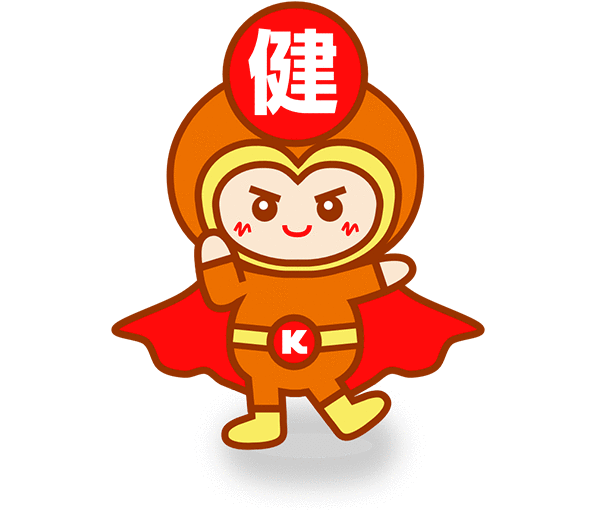
Health Management Mascot
Captain Kenta-kun

Medical Office Mascot
Hanaemi-chan
Initiatives to Improve Health Literacy
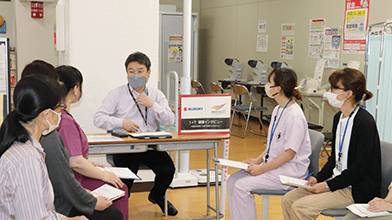
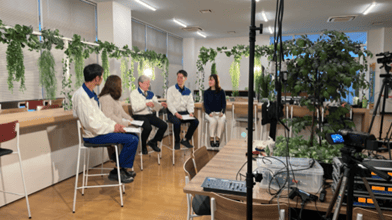
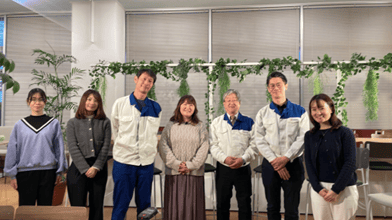
Roundtable discussion between management and employees
We regularly hold roundtable discussions on health management between senior management, including the President, and employees. Videos of these discussions are shared internally to improve employees’ health literacy.
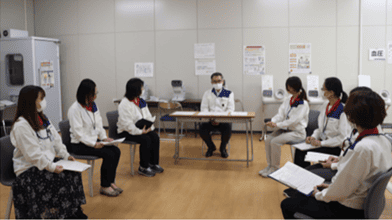
Health checkups and Health Promotion
Employees under the age of 40 undergo regular health checkups at company facilities, while those aged 40 and above undergo comprehensive health checkups at external medical institutions to facilitate the early detection and treatment of cancer and other diseases. In collaboration with the Suzuki Health Insurance Association, we also emphasize dental health and have established a system that enables employees to receive annual dental checkups. Health checkups are also available to employees’ family members to help both employees and their families lead healthy and fulfilling lives. Furthermore, to help employees improve their lifestyle habits, we make their vegetable intake visible and provide health guidance focused on everyday eating habits.
Specific health guidance*
The Health Insurance Association and medical offices at each business location collaborate to ensure that employees who were not able to receive specific health guidance during their comprehensive medical checkups at outside medical institutions can access such guidance within the Company.
* Based on the results of the specific health checkup, for those who are at high risk of developing lifestyle-related diseases and can expect significant preventive effects through lifestyle improvements, specialized staff (such as public health nurses and nurses) will provide support to help review and improve their lifestyle habits.
Mental health measures
As part of our mental health initiatives, in addition to conducting various programs tailored to different hierarchical levels and providing training on self-care and line-care, we also implement site-specific self-care and line-care training at each business location.
Furthermore, to enable early detection of signs of mental health problems, we conduct mental-health-focused health questionnaires and consultations with occupational physicians. We strive to prevent health-related issues.
For consultation and support, we have in-house medical offices and a “Mind Consultation Room,” where counseling is available free of charge from external psychiatrists and clinical psychologists. In addition, we have introduced an external EAP service so that employees can consult not only about stress related to work but also about concerns in their personal lives. We have established an environment in which not only employees but also their family members can use these services.
Initiatives to promote habitual exercise
Athletes from the Suzuki Athlete Club travel to various offices to provide instruction in Suzuki Original Calisthenics, “Suzuki W-UP Gymnastics,” and the correct way of walking and more.
Suzuki Original Calisthenics, “Suzuki W-UP Gymnastics,” were devised by athletes of the Suzuki Athlete Club based on an internal survey.
As a result of these activities, employees’ habitual exercise increased from 20.6% (in FY2022) to 26.1% (in FY2024).
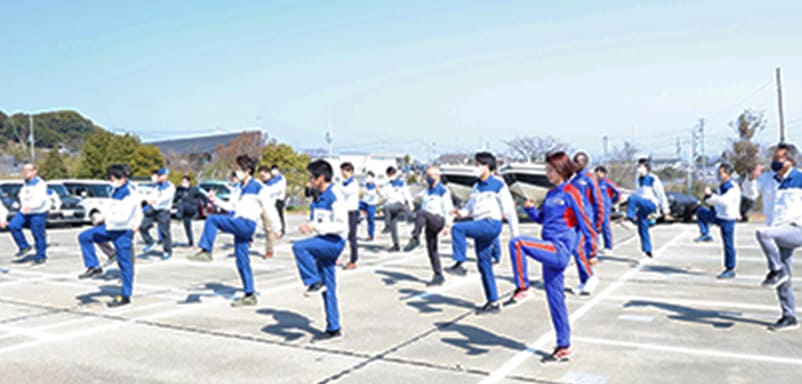
habitual exercise Promotion Initiatives
at the Marine Technical Center
Health support for women
We have established a health consultation service run by an obstetrician-gynecologist where female employees can easily go with questions about their own health, and where male employees can also turn for answers to questions about their partner’s health, pregnancy and childbirth.
We are implementing e-learning on women's health issues for all employees, aiming to create a workplace where women can work comfortably.
Health management initiatives for employees assigned overseas
For overseas assignees and their accompanying family members, we provide health checkups and preventive vaccinations both before and after assignment through our in-house program. In addition, we ask overseas assignees to check medical information from the Ministry of Foreign Affairs and the FORTH medical information service of the Ministry of Health, Labour and Welfare’s quarantine office, and we encourage them to understand the symptoms, treatments, and prevention methods for diseases (including infections such as tuberculosis, malaria, and HIV) that are prevalent in the destination country or region. Depending on the destination country or region, we also recommend various vaccinations at the Company’s expense.Even while overseas, we have set up a system that enables assignees to receive advice and guidance from our in-house occupational physicians, public health nurses, and nurses through online meeting platforms, among other means. We have also subscribed to a medical assistant service, which provides support such as hospital appointment booking, medical interpretation, and cashless services using overseas travel insurance when overseas assignees experience injuries or illnesses.
Initiatives to prevent exposure to secondhand smoking
We invite employees to take on the challenge of quitting smoking. The Health Insurance Association subsidizes half the cost of outpatient smoking cessation treatment, up to a maximum subsidy of ¥10,000 per employee. To prevent exposure to secondhand smoke and improve the workplace environment, we prohibit smoking indoors and restrict where and when smoking is permitted outdoors. We have also designated every Friday as a day when employees across the company are encouraged not to smoke. To make these efforts more effective, labor and management have jointly established a working group to carry out activities to prevent exposure to secondhand smoke.
Employee Benefits that Contribute to Health Management
Our cafeteria plan (a flexible benefits plan) is one of our employee benefits programs. It offers a wide range of options that support health and help employees balance work and family responsibilities,* providing financial assistance tailored to their needs.
* Examples include childcare and eldercare services and related supplies, health checkups for spouses, vaccinations, and the use of fitness and sports facilities.
Japan
Domestic sales distributors
Implementation of Health Management Training
Our sales distributors place importance on employee health management and promote initiatives to put health management into practice. They conduct health management training for employees as needed to raise health awareness among all employees and promote 27 health management throughout their organizations. Some distributors have also incorporated health management seminars into their meetings to encourage their business partners (sub-distributors) to adopt health management practices.
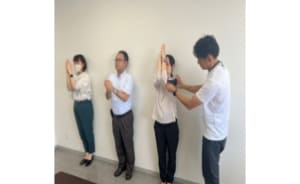
Health check to confirm back pain risk
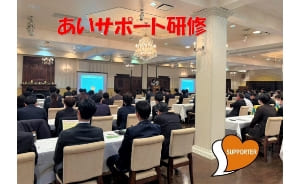
Training on the Ai Support Movement
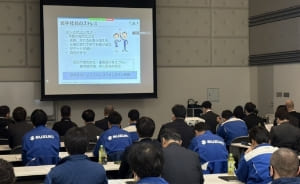
Mental Health Seminar
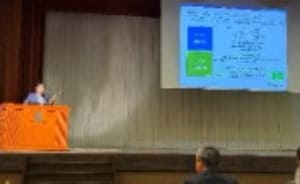
“Health management seminar (held at a meeting for sub-agency partners)”
〈In cooperation with Tokio Marine & Nichido Fire Insurance Co., Ltd.〉
Initiatives to Create Supportive Workplace Environments
Our sales distributors place importance on maintaining and improving employees’ health and work to create supportive workplace environments. A total of 34 sales distributors have each been certified as a 2025 KENKO Investment for Health (KIH) Outstanding Organization (Large Enterprise Category) under the Certified KIH Outstanding Organizations Recognition Program,* jointly administered by the Ministry of Economy, Trade and Industry and the Nippon Kenko Kaigi.
* Certified KENKO Investment for Health (KIH) Outstanding Organizations Recognition Program: A program that recognizes large corporations, small and medium-sized enterprises, and other organizations demonstrating outstanding health management practices through initiatives that address local health challenges and health promotion efforts advanced by the Nippon Kenko Kaigi.
Suzuki sales distributors recognized as 2026 KIH Outstanding Organizations (Large Enterprise Category)
| Suzuki Motor Sales Hokkaido Inc. | Suzuki Motor Sales Kanto Inc. | Suzuki Motor Sales Hokuriku Inc. | Suzuki Okayama Motor Sales Inc. |
| Suzuki Motor Sales Aomori Inc. | Suzuki Motor Sales Chiba Inc. | Suzuki Motor Sales Kyoto Inc. | Suzuki Motor Sales Fukuoka Inc. |
| Suzuki Motor Sales Yamagata Inc. | Suzuki Motor Sales Keiyo Inc. | Suzuki Motor Sales Kinki Inc. | Suzuki Motor Sales Saga Inc. |
| Suzuki Motor Sales Fukushima Inc. | Suzuki Motor Sales Tokyo Inc. | Suzuki Motor Sales Kansai Inc. | Suzuki Motor Sales Kumamoto Inc. |
| Suzuki Motor Sales Ibaraki Inc. | Suzuki Motor Sales Minami Tokyo Inc. | Suzuki Motor Sales Hyogo Inc. | Suzuki Motor Sales Oita Inc. |
| Suzuki Motor Sales Tochigi Inc. | Suzuki Motor Sales Syonan Inc. | Suzuki Motor Sales Nara Inc. | Suzuki Motor Sales Kagoshima Inc. |
| Suzuki Motor Sales Gunma Inc. | Suzuki Motor Sales Niigata Inc. | Suzuki Motor Sales Wakayama Inc. | Suzuki Motor Sales Okinawa Inc. |
| Suzuki Motor Sales Saitama Inc. | Suzuki Motor Sales Tokai Inc. | Suzuki Motor Sales Tottori Inc. | |
| Suzuki Motor Sales Nishisaitama Inc. | Suzuki Motor Sales Nagano Inc. | Suzuki Motor Sales Hiroshima Inc. |
Hungary
Magyar Suzuki Corporation Ltd.
On June 25, 2025, Magyar Suzuki was again certified as a “Family-Friendly Workplace.” The “Family-Friendly Workplace” is a certification program in Hungary for companies and organizations that have created an environment in which employees can more easily balance work and family life.
India
Maruti Suzuki India Limited
●TB elimination: As part of the “TB Mukt Maruti Suzuki India Limited” initiative, we discussed cooperation with district TB control teams in line with the national TB elimination targets.
●HIV/AIDS awareness: As part of the onboarding training for new employees, we conduct awareness-raising education.
●Malaria prevention: We carry out regular insecticide spraying at all plants, increasing the frequency especially during the rainy season, and we also provided employees with long-sleeved shirts.
India
TDS Lithium-Ion Battery Gujarat Private Limited
Infectious disease prevention education and countermeasures
We provide employees with medications for infection prevention, and we also conduct education on infection prevention. We are working on infection prevention and management plans.
Philippines
Suzuki Philippines, Inc.
Health information activities related to Nipah virus
As part of our health management program, on February 2, 2026, we conducted health information activities related to the Nipah virus and provided employees with information on its symptoms, prevention methods, and what to do if they become affected. The purpose of this initiative is to raise health awareness in the workplace and strengthen preparedness for infectious diseases.
In addition, Suzuki Philippines, Inc. also operates a referral program for employees who have contracted tuberculosis, supporting them so that they can receive medications free of charge from a government-run health center during the treatment period. This reflects the company’s ongoing efforts toward employees’ health and welfare benefits.
Vietnam
Vietnam Suzuki Corp.
Each month, we carry out insecticide spraying to eliminate mosquitoes and other pests, and we also set traps to control rats. This helps prevent malaria and dengue fever.
Colombia
Suzuki Motor de Colombia S.A.
We conducted preventive and health-promotion campaigns. In addition, to support return to work, we provided medical follow-up for cases where infection was suspected and for cases where infection was confirmed.
Initiatives to Promote Health Management in the Community
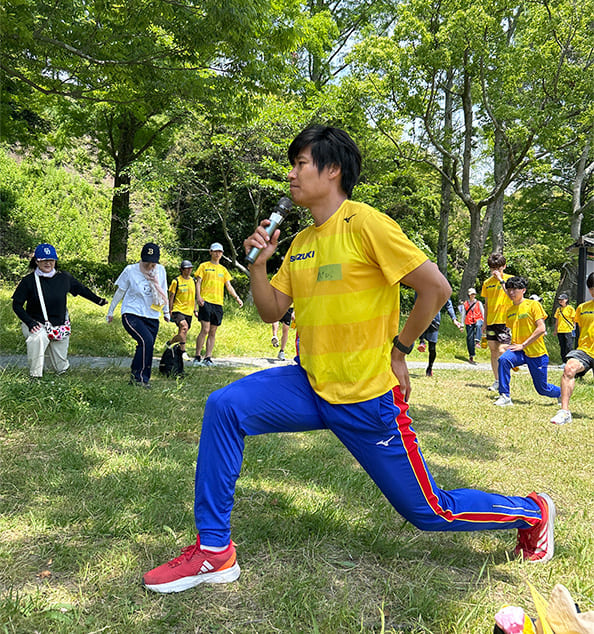
As part of efforts to contribute to community health, former Olympic athletes from the Suzuki Athlete Club have attended the Lake Sanaru Fureai Walk since 2024, an event sponsored by the local government, offering pre- and post-walk exercise and a class in the correct way to walk.
Indonesia
PT Suzuki Indomobil Motor
We held a dengue fever seminar for residents in the Cikarang area.
India
Maruti Suzuki India Limited
Menstrual Hygiene Education Project
We conducted a menstrual hygiene awareness project for students of public schools in the state of Haryana. Through systematic awareness-raising activities, we aimed to improve knowledge, reduce prejudice, and promote safe menstrual hygiene practices.
Provision of local healthcare services
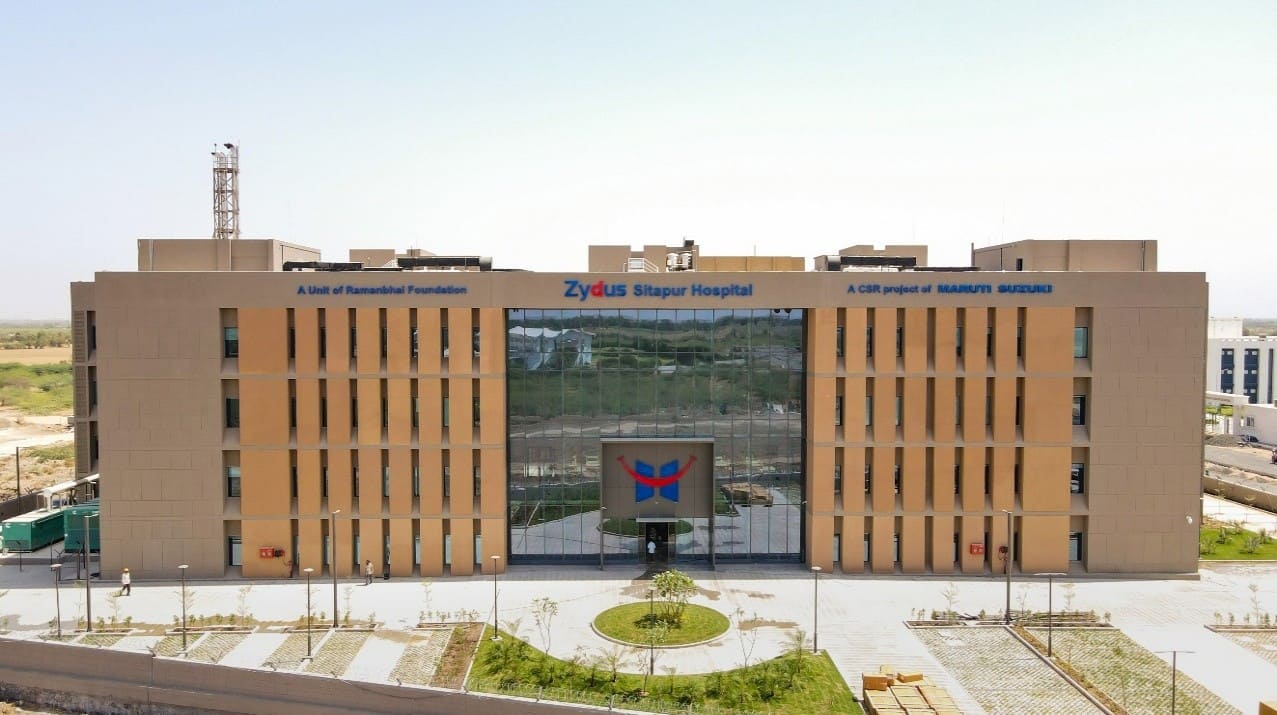
As part of its CSR initiatives, we provide high-quality medical services to local residents, including those in surrounding villages, through Zydus Sitapur Hospital in the Sitapur area of Gujarat.
Activities conducted by MHU
Using a Mobile Health Unit (MHU), we provided free medical consultations and healthcare consultation services to local residents in Gujarat.
Philippines
Suzuki Philippines, Inc.
Suzuki Blood Donation Program
On December 16, 2025, Suzuki Philippines, Inc. collaborated with the Philippines Blood Center, a government agency, to carry out its annual blood donation program. In this program, 47 employees participated in the blood donation. The initiative aims to support the maintenance of stable and sufficient blood supply, which is continuously needed in the country, while also encouraging employees to improve their health and participate in wellness activities.
The collected blood was provided to private and public blood service organizations, contributing to ensuring an important medical resource for patients who require blood transfusions. This initiative reflects Suzuki’s continued commitment to contributions to public health, fulfillment of social responsibility, and support for local communities—achieved through a meaningful and highly effective program.
Pakistan
Pak Suzuki Motor Co., Ltd
Blood Donation Campaign
In November 2025, we conducted a blood donation campaign. This initiative involved participation from the plant and regional offices.
Employee Benefits
Dormitories for single employees and Company housing
Suzuki provides dormitories for single employees who join the Company from distant locations. Company housing is also available in some regions for employees working at Suzuki’s domestic business sites, including those on secondment.
Company-leased housing
For employees working at domestic business sites or sales distributors in regions where no dormitories or company housing are available, including those on secondment, Suzuki leases residential properties that they can occupy under arrangements similar to those for company housing and dormitories.
Sports facilities
Suzuki provides sports facilities to help employees improve their health and physical fitness and make good use of their leisure time.
Employee cafeterias and food trucks
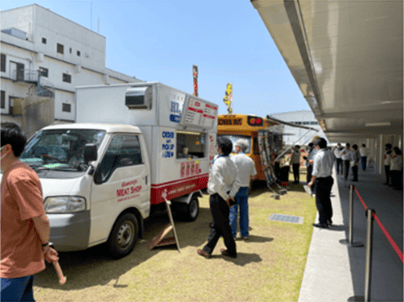
In addition to the employee cafeteria, food trucks operate on the head office premises at lunchtime on certain days of the week. They offer not only café-style options, including sweets such as crepes and shaved ice, as well as drinks, but also lunch items such as hamburgers, lunch plates, and soups. On sunny days,employees can enjoy their meals on benches in the lawn area. On January 15, 2024, we began offering new Indian vegetarian dishes at the head office employee cafeteria. These dishes were developed with the cooperation of a company that operates restaurants and other businesses in Hamamatsu City. Suzuki employees from India also helped develop the flavors to recreate authentic Indian flavors. The dishes are also available by advance reservation at sites other than the head office. In response to strong demand for food trucks at locations other than the head office, we are expanding food truck operations to other sites, including our plants.
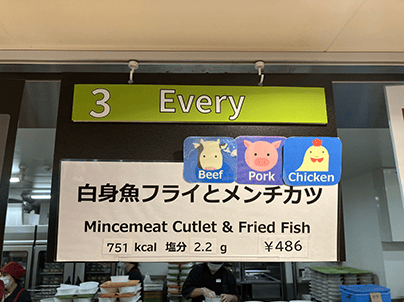
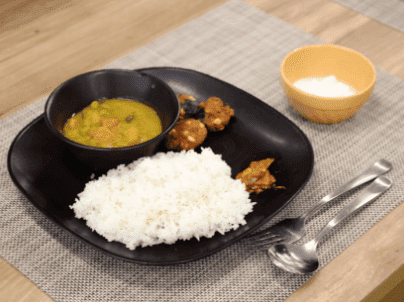
Ingredient labels displayed with consideration for foreign nationals and employees with religious dietary restrictions.
Asset accumulation savings program
Suzuki offers an asset accumulation savings program to encourage employees to save. Employees under the age of 55 are eligible to participate. The program offers three types of savings plans: general savings, pension savings, and housing savings.
Employee vehicle or family vehicle purchase program
This program allows employees and their families up to the first degree (employees’ spouses or children) to receive a certain discount on the vehicle price when purchasing vehicles (new Suzuki products). (Some models are excluded.) In addition, when financing is needed for the purchase, they can apply for a loan to cover the required funds.
Employee stock purchase plan
The employee stock purchase plan allows employees to purchase Company shares regularly through fixed deductions from their monthly salaries. Employees can purchase shares at a manageable level through their monthly contributions, and the Company provides additional incentive payments to support their asset building. Beyond providing an employee benefit, the plan is expected to enhance motivation by enabling employees to share in the Company’s success: improved business performance can lead to a higher share price and, in turn, an increase in the value of their holdings. It also helps foster a sense of participation in the Company’s management. In April 2023, as part of its human capital investment initiatives, Suzuki increased the company matching contribution rate for its employee stock ownership association from 5.6% to 100%, with a maximum incentive payment of ¥10,000. By making the plan attractive and easy to join, we aim to encourage more employees to join the association, support their asset building, and strengthen their sense of participation in the Company’s management.
| Annual | After change | Before change | ||
|---|---|---|---|---|
| Salary | Bonus | Salary | Bonus | |
| Maximum amount of accumulated funds eligible for incentive payment | 120,000 Yen (10,000 Yen/month) |
‐ | 600,000 Yen (50,000 Yen/month) |
400,000 Yen (200,000 Yen × 2) |
| Maximum annual incentive amount | 120,000 Yen | ‐ | 33,600 Yen | 22,400 Yen |
Flexible Benefits Plan (Cafeteria plan)
This plan is designed to ensure that employees have equitable access to employee benefits regardless of their work location or environment, and to accommodate the diverse preferences of individual employees. Employees can freely choose from a benefits menu established by the Company, including support for work-life balance, health, skills development, leisure, and daily living. They can receive financial assistance up to the value of their allocated points (cafeteria points).
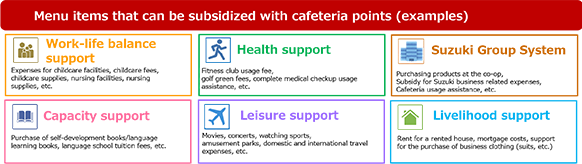
Benefit station
This service allows employees to use a menu of options established by the Company—including travel, leisure, dining, sports, shopping, and learning—at discounted member rates, with no limit on usage. For options eligible under the cafeteria plan, employees can also use their cafeteria points in conjunction with these member discounts.