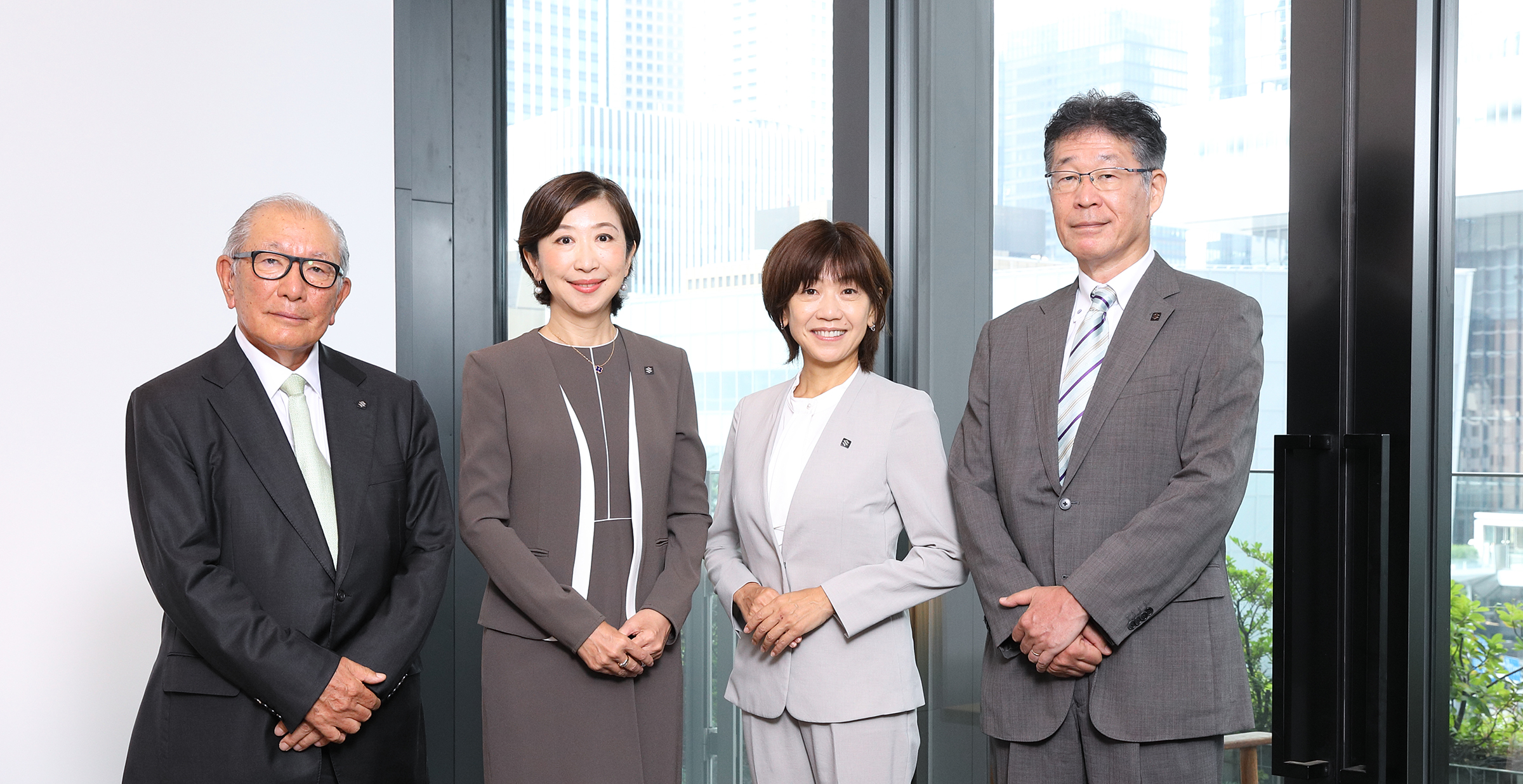
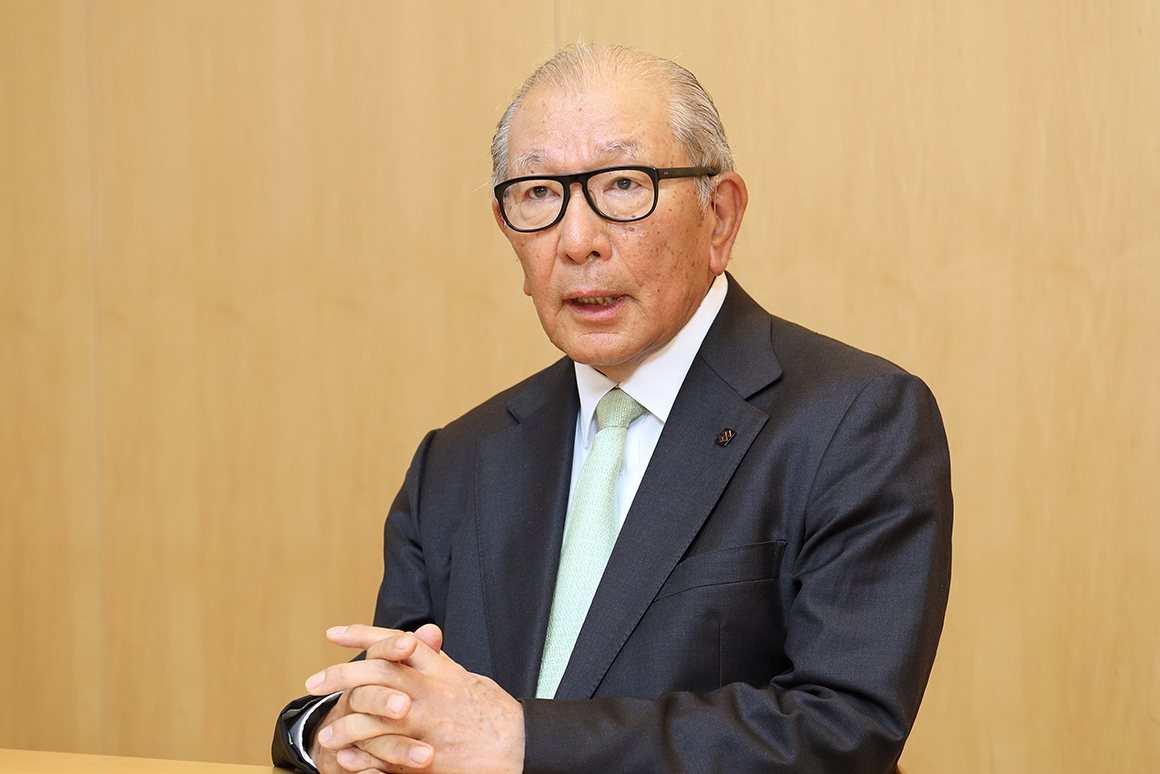
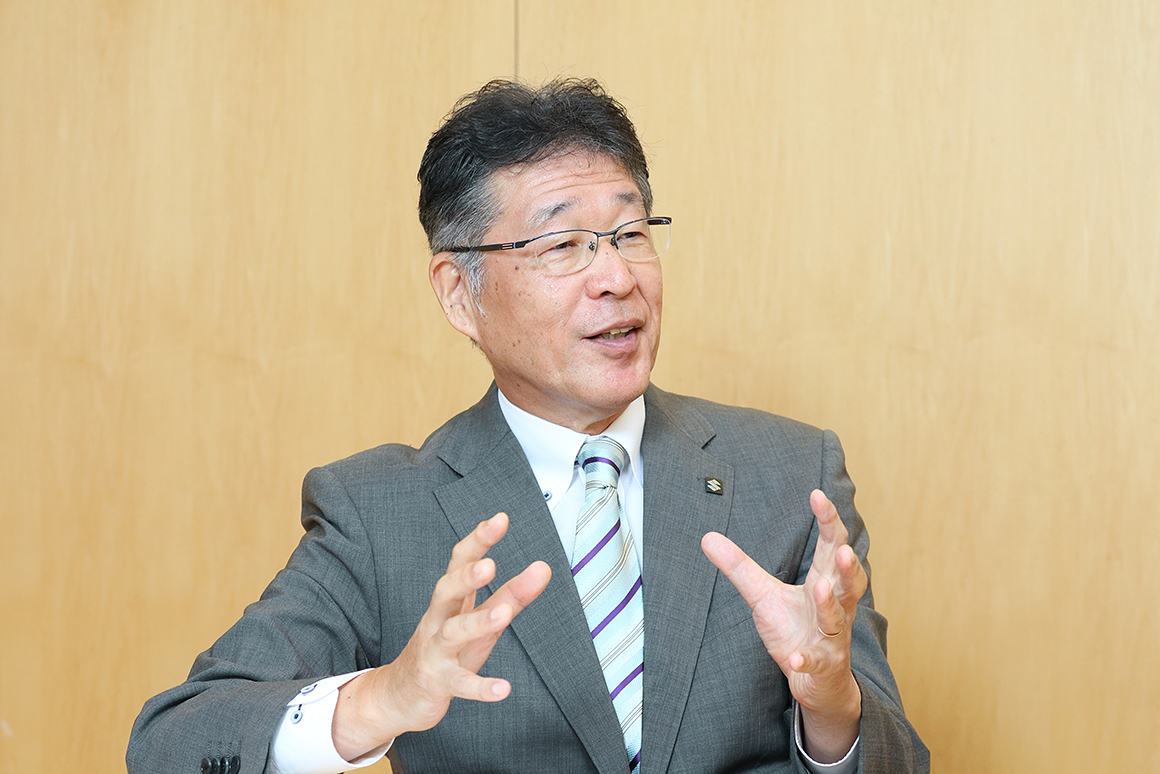
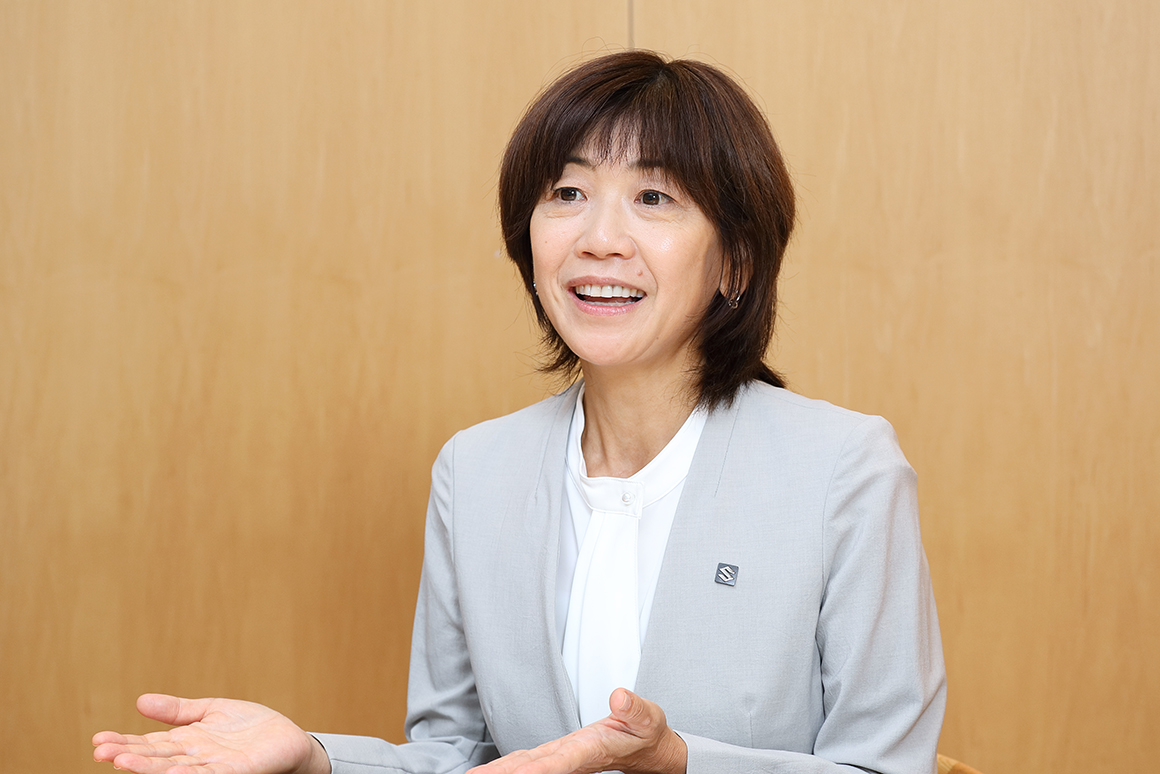
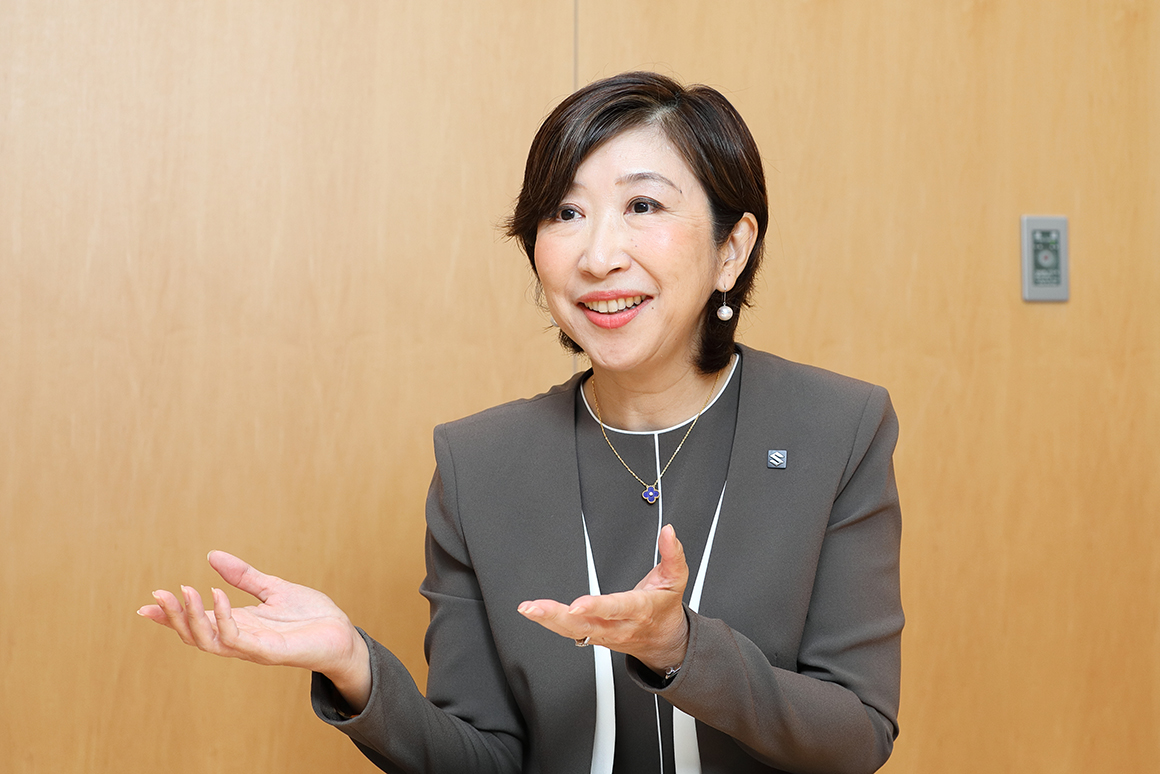
Under the new Mid-Term Management Plan “By Your Side,” Suzuki is pursuing further growth on the global stage while envisioning its mid- to long-term future. Four Outside Directors, each with extensive expertise in their respective fields, shared their views on Suzuki’s pursuit of future growth, including its governance, the effectiveness of the plan, and Suzuki-style ROIC management.
Suzuki’s Management Philosophy for Pioneering a New Era
Takahashi:
I have been an Outside Director for three years. Board meetings are a forum for lively exchanges of views, and the atmosphere is truly open. We Outside Directors can not only sit in on various internal meetings at Suzuki but also review the related materials. This allows us to participate in Board meetings with an understanding of the discussions that took place before each matter was submitted to the Board. I have also sensed changes in compliance and risk management. Reporting to the Corporate Governance Committee has become more active than before, and a culture in which issues can be shared openly rather than concealed has steadily taken root. I sense a commitment throughout the organization, including at the frontline, to increasing transparency and making Suzuki a better company.
Egusa:
The Corporate Governance Code has been revised, which I see as a message from society that Outside Directors should become more actively involved in management. Suzuki already has advanced practices in place, but I believe the four of us now shoulder even greater responsibility.
Domichi:
I was appointed as an Outside Director in 2020 and am now in my seventh year. During that time, the COVID-19 pandemic struck, and semiconductor shortages forced Suzuki to adjust production. Under normal circumstances, these challenges would have caused its business performance to deteriorate. Yet Suzuki has continued to improve its performance throughout this period. I did not really understand why at first, so I began referring to it as “Suzuki’s resilience.” Gradually, however, I came to realize that the source of Suzuki’s strength lies in its Mission Statement and the three aspects of its Philosophy of Conduct. Suzuki updated one statement of its Philosophy of Conduct from “Three Realities” to “Three Realities and Two Fundamentals,” adding “Genri (Fundamental Principle)” and “Gensoku (Fundamental Rule)” to “Genba, Genbutsu, Genjitsu (Actual Place, Actual Thing, Actual Situation).” It may sound obvious, but it prompted considerable discussion at the Board meetings. I did not initially understand its significance either and asked management why “Genri (Fundamental Principle)” and “Gensoku (Fundamental Rule)” were being added at this time. They explained, “Suzuki is rapidly accumulating and analyzing data. In doing so, we are finding that some of what we had taken for granted no longer holds true.” In other words, Suzuki is striving to discover the true “Genri (Fundamental Principle)” and “Gensoku (Fundamental Rule).” I understand that Suzuki is seeking to become a data-driven company, and that updating the Philosophy of Conduct to “Three Realities and Two Fundamentals” reflects this thinking.
Egusa:
Suzuki has demonstrated unwavering strength even in the face of the COVID-19 pandemic and geopolitical risks, and I believe it also has significant technological advantages. People tend to assume that compact vehicles are easy to make, but they are required to meet safety standards equivalent to those for larger vehicles. I once spoke with some of Suzuki’s engineers and learned about the tremendous efforts being made behind the scenes, including efforts to enhance collision safety performance. I believe these vehicles are supported by technologies and expertise that Suzuki has cultivated over many years.
Aoyama:
Although I have only recently been appointed, what has impressed me most is Suzuki’s strong commitment to listening. Not only do we Outside Directors feel free to speak up, but every view we express is also followed up on. I believe one of Suzuki’s defining characteristics is its determination not merely to acknowledge those views, but to translate them into improvements. I understand that the recent addition of the “Two Fundamentals” to the “Three Realities” reflects an approach of determining the fundamental principles and rules, identifying issues, and making the necessary updates to address them, including updates to the relevant rules. In a rapidly changing environment, Suzuki actively seeks out and incorporates external perspectives. It also listens closely not only to Outside Directors but to frontline employees.
Promoting “Individual Growth” to Achieve Our Targets
Egusa:
Revenue per compact vehicle is low. Compact vehicles have the advantage of selling in large volumes, but unless they are produced and sold with exceptional efficiency, they cannot generate profits. Looking at the actual figures, Suzuki has steadily delivered very strong performance. This suggests that “Three Realities and Two Fundamentals” and “Sho-Sho-Kei-Tan-Bi (Smaller, Fewer, Lighter, Shorter, Beauty)” are deeply ingrained throughout the organization and contribute to highly efficient management. However, if Suzuki is to continue growing, ever greater demands will be placed on productivity and development efficiency. What will underpin both is “individual growth.” The Mid-Term Management Plan “By Your Side” (hereinafter, the Current Mid-Term Plan) emphasizes “individual growth.” In this context, I see the adoption of AI as an approach that reflects Suzuki’s character.
Domichi:
Suzuki began introducing AI as early as 2019, and routine tasks have already been streamlined. The use of AI is also advancing across frontline operations, including design and painting.
Egusa:
This allows employees to use the time saved to think more creatively and further improve operational efficiency. This, in turn, should lead to “individual growth.”
Takahashi:
I have competed in the world of track and field. In the world of sports as well, all kinds of data are quantified, and I often made use of such data during my competitive career. However, when making final decisions, I did not rely on data alone. I placed great importance on listening to my body and speaking with my coaches. I believe the same is true in management. AI is a reliable partner, but final decisions must ultimately be made by people on the frontline. I believe data, frontline experience, and human judgment must work together to foster “individual growth.”
Domichi:
In pursuing “individual growth,” I do not believe Suzuki can limit its focus to Japanese employees. Suzuki envisions a future in which it expands its global strategy with India at its center. At the same time, competition is intensifying as foreign companies enter the market at a rapid pace. Accordingly, I believe it is most important to take an integrated, strategic approach to “individual growth” not only in India but also in other regions. There is also the challenge of how to make “individual growth” visible in Japan. Until now, the effects of such growth, including the results of the personnel system reform, have not always been easy to see. Recently, however, indicators have begun to emerge that express these effects in terms of “earning power.” For example, the idea is to assess earning power by aggregating the contributions from factors such as the profitability of new models, model mix, and cost reductions. Furthermore, Suzuki is also pursuing its own approach to ROIC management to make investments and returns visible. I expect this approach to play a major role in implementing the Current Mid-Term Plan.
Aoyama:
A distinctive feature of Suzuki-style ROIC management is its effort to break down company-wide figures and translate them into targets for departments, individual projects, and even individual employees. The aim is not to manage numbers, but to establish a system that enables each employee to grow by understanding their own role and achievements. “Individual growth” is also discussed at Board meetings, and we Outside Directors place great importance on it. I believe it will help not only to strengthen earning power but also to enhance compliance and risk management. In today’s rapidly changing environment, everyone must recognize issues as they arise, share them, and work together to resolve them. That is the true strength of Team Suzuki, built on “individual growth.” If I were to point to one challenge, it would be that “individual growth” takes time. I intend to monitor this closely.
Growth Investments with an Eye to the Future
Domichi:
The Current Mid-Term Plan calls for investment totaling 4 trillion yen over six years. The first component is 2 trillion yen in capital expenditure, of which 1.2 trillion yen will be invested in India. Investment toward establishing production capacity of 4 million vehicles by 2030 is essential for maintaining Suzuki’s competitive advantage. The second component is 2 trillion yen in research and development expenses. Of this amount, 1.35 trillion yen will be allocated to technology to minimize energy consumption, a key area of focus. This investment is being made with a view to the next 10 years. It is critical because this technology will be vital to Suzuki’s future.
Egusa:
Although momentum in the EV market has slowed somewhat, Suzuki has continued to invest consistently. Making investment decisions based on short-term economic conditions or technology trends can lead a company in the wrong direction. Observing Suzuki has reinforced for me the importance of continuing to invest consistently over a five- to 10-year horizon, based on our strengths and position in the market. At the same time, I intend to closely scrutinize which investments should be prioritized and which areas of development can deliver a competitive advantage.
Aoyama:
From a shareholder’s perspective, key concerns are whether investments for future growth are being steadily made with appropriate risk management in place, and whether those investments are leading to improved capital efficiency and the creation of corporate value. We also review management from this perspective. Suzuki takes a disciplined approach to capital allocation, using operating cash flow for both shareholder returns and growth investments. In making investment decisions, we maintain a rigorous focus on investment efficiency. While working to enhance earning power, we oversee whether investments are being made appropriately to meet the needs of society and customers and to advance next-generation infrastructure mobility. We believe that balancing sustainable growth with the creation of social value is a key responsibility of ours.
Domichi:
Although this is not directly related to the automobile business, Suzuki invests in Indian startups through its Indian subsidiary, Next Bharat Ventures (hereinafter, NBV). Indian society is not as mature as Japanese society. That is precisely why innovation emerges there. Suzuki entered India in 1983 and stands foremost among Japanese companies in its knowledge of the country. Its strategy is to grow alongside India through these investments and then extend these connections from India, a key country in the Global South, to Africa and other regions.
Takahashi:
India is indeed a lifeline for Suzuki, and I believe investment there is highly significant. Of its population of 1.4 billion, 1 billion people still do not own a car. Suzuki needs to build connections with them. By working with NBV to support startups and other companies addressing social issues in local communities, Suzuki aims to help improve their standard of living so that owning a car becomes attainable. Through these activities, Suzuki will grow into a company that local communities need. I feel this is a distinctly Suzuki strategy. Over the long term, I believe Suzuki itself will become an essential part of the social infrastructure supporting the lives of local people.
Infrastructure Mobility Closely Connected with People’s Lives
Domichi:
The Current Mid-Term Plan sets out the challenge of realizing infrastructure mobility closely connected with people’s lives. This is very much in keeping with Suzuki’s character. In rural areas of Japan, for example, there is one Suzuki vehicle for every person, and these vehicles are widely relied on as a means of daily transportation. Meanwhile, the declining number of gas stations in regional areas has become a major social issue. In this context, EVs that can be charged at home are not simply new products, but they can become infrastructure that supports people’s mobility. Suzuki plans to introduce a mini passenger EV and is also developing a charging environment by utilizing its nationwide sales network. I believe this initiative symbolizes infrastructure mobility closely connected with people’s lives. The same applies in India. Suzuki has many service locations in the country, which will be a major strength as the shift to EVs progresses.
Egusa:
When I hear the term “infrastructure mobility,” I think of the world of large-scale, heavy-duty logistics, such as large trucks, railways, aircraft, and maritime transport. At first, I felt that this did not quite fit with “Sho-Sho-Kei-Tan-Bi (Smaller, Fewer, Lighter, Shorter, Beauty),” which Suzuki values. However, when Suzuki began investing in collaboration with Glydways, a U.S. startup, to develop a new form of public transportation service, I realized that this was Suzuki’s vision of infrastructure mobility. It is a unique system in which mini-vehicle-sized electric vehicles travel autonomously on dedicated lanes. It can be built with a relatively small investment, and the number of vehicles can be increased as the system becomes more widely used. It is expected to become an important mode of urban transportation.
Takahashi:
Suzuki’s challenge of realizing infrastructure mobility begins with taking the customer’s perspective and communicating closely with local communities. Suzuki values its dealers nationwide and holds kickoff meetings at the beginning of each fiscal year. By strengthening cooperation and deepening connections with local people, Suzuki builds strong, long-term relationships through which customers receive ongoing support—not only when they purchase a new vehicle, but for as long as they use it. To use an analogy from athletics, Ekiden (long-distance relay race) cannot be won if only one runner is strong. When I competed in Ekiden races, I made a point of running every section of the course in advance, not just my own. This allowed me to understand the feelings with which each runner approached their section and to connect the thoughts and feelings of everyone on the team—including the role entrusted to me, the weight of the sash, their sweat, and the passion in their hearts. All of them can affect the outcome of the race. The question is how each individual connects with the team. As Suzuki takes on the challenge of realizing infrastructure mobility and seeks to further develop activities rooted in local communities, I believe the question will be how Team Suzuki as a whole evolves.
Aoyama:
We had extensive discussions about investing in NBV as part of our initiatives for local communities. A calculation of its ROIC would probably show a negative figure at present. Even so, we made a deliberate decision to proceed. This is because it is important for people in India to have a positive impression of Suzuki and to want to drive Suzuki vehicles. However, this kind of value cannot be fully measured in numbers.If Outside Directors were to make decisions based solely on numbers, we ourselves could be replaced by AI. That is why we value the perspective of whether an investment will help build relationships with future customers and address issues facing local communities. This represents Suzuki’s distinctive approach to infrastructure mobility. We will continue to hold disciplined discussions on investments that contribute to earning power.
Recommendations for Global Growth
Takahashi:
As early as 1983, Suzuki ventured into India with a bold vision. I hope Suzuki never loses that spirit of challenge or its global perspective. At the same time, I hope Suzuki will remain true to what makes it unique by continuing to value “Sho-Sho-Kei-Tan-Bi (Smaller, Fewer, Lighter, Shorter, Beauty)” and staying rooted in local communities. By drawing strength from both its willingness to take on challenges and its commitment to staying close to local communities, I hope Suzuki will continue to expand infrastructure mobility.
Aoyama:
Like Ms. Takahashi, I hope Suzuki will continue to be a company that provides infrastructure mobility solving the challenges faced by many people. Given my own background in finance, I also want us to continue discussing how to manage risk and generate returns on investment while giving due consideration to the sustainable enhancement of corporate value. As a member of Team Suzuki, I hope these discussions will help us move closer to our vision.
Egusa:
Under the Current Mid-Term Plan, Suzuki has declared its aim of achieving revenue of 8 trillion yen and operating profit of 800 billion yen. However, investor expectations are likely to rise toward revenue of 10 trillion yen and operating profit of 1 trillion yen. Reaching 10 trillion yen would require Suzuki to produce close to 5 million vehicles, which likely cannot be achieved simply by continuing along its current path. It is important to make “individual growth” even more visible and clearly show how these initiatives are leading to greater efficiency, faster execution, and increased earnings. Suzuki has many excellent initiatives. If it can effectively communicate how they contribute to corporate value, investors will gain a deeper understanding, leading to continued investment. I believe this virtuous cycle will become a driver of Suzuki’s growth.
Domichi:
More than 70,000 people currently work across the Suzuki Group, and over half of them are employees of overseas subsidiaries. Suzuki’s strength lies at the frontline, and the employees of its overseas subsidiaries are on the frontlines in their respective countries. Suzuki has succeeded in India, but it must now expand its business in other promising markets, including Africa, the Middle East, and Latin America. The key will again be the frontline. Suzuki must share its way of thinking with colleagues working on the frontlines around the world. For example, we believe that “Sho-Sho-Kei-Tan-Bi (Smaller, Fewer, Lighter, Shorter, Beauty)” is a sound approach, but people around the world hold different values. Success will therefore be difficult unless they understand and embrace why Suzuki places importance on this way of thinking. I hope Suzuki will ensure that its Mission Statement and Philosophy of Conduct are understood and embraced by all Group employees and use them to drive further growth.


 Japan